XRF Advice: Improve Efficiency with Turret Stage

Eastern Applied Research offers several x-ray fluorescence analyzers that provide material analysis of powders, liquids and solids - these systems, from the Xenemetrix Inc analyzer line, will often be utilized in an industrial, or University, laboratory.  In this type of setting, the ED-XRF technology is often utilized as a screening device and the throughput potential is a major benefit for the laboratories that add ED-XRF.  Among other aspects of the technology, increased throughput from ED-XRF is made possible by the inclusion of a turret stage.

Xenemetrix XRF Turret StageWhen organizations take advantage of turret stages they will realize increased efficiencies from the XRF analzyer and the laboratory personnel utilizing it.  Also known as ‘automatic sample changers’, they provide operators with two different approaches to increase measurement efficiency - both are detailed below.

STANDARD BENEFIT: Take Multiple Readings on Multiple Samples
When sample conditions will be the same for all of the samples in a batch, the turret stage provides the operator with time to handle other tasks while measurements are performed.  Simply set the appropriate test parameters and fill the stage with prepared sample materials and begin the measurement.

As an example of the time savings, with a 100 second measurement for each sample in a ten-sample changer, an operator will free up over 16 minutes of time!  This benefit is exponential when taking multiple readings on each sample…take five measurements of each sample at 100 seconds and the operator frees up over one hour of time.

ENHANCED BENEFIT: Set Multiple Conditions
To expand on the benefit noted above, many Xenemetrix analyzers allow users to set multiple measurement conditions and then save them for a quick recall.  This is beneficial because using optimum conditions (ie appropriate filters) for specific elements of interest will enhance the accuracy of the instrument when looking for those target elements.

An operator can prepare five different measurement conditions to focus on five different elements of interest that will be the same for each sample on a ten position sample stage.  The Xenemetrix analyzer can automatically run through the five measurements on the first sample and then automatically move onto the next sample, running through all five conditions before moving onto the next sample.  If a laboratory technician set five conditions and took five measurements of 100-seconds each on ten samples, they would free up over six hours of their time.

Do you feel that this option may help to increase your lab’s throughput?  If so, request a free consultation from an XRF Sales Associate from Eastern Applied to discuss the potential efficiency that it can offer.  The most popular systems with turret stages that vary from 8 to 18 sample spots include the Xenemetrix X-Calibur SDD, X-Cite and the laboratory grade EX-6600 SDD.

Turret Stage Design

Design of a Xenemetrix Turret Stage

2011 Highlighted by Addition of Two New Analyzer Lines

Looking back at 2011, the major news this year was about adding new analyzer lines at Eastern Applied Research.  We are pleased to be working with two of the top manufacturers of x-ray fluorescence technology and believe the addition of these high quality XRF analyzers will lead Eastern Applied Research into a successful 2012.

Element Xr for Coating Thickness

Element Xr Coating Thickness AnalyzerIn March of 2011, Eastern Applied Research was selected as the North American service company for Roentgenanlytik GmbH (Roen).  Soon after, Eastern Applied was able to agree with the manufacturer of XRF for coating thickness applications to release the Element Xr line to the North American market.  Element Xr combines the manufacturing experience of Roen with Eastern Applieds knowledge of coating thickness applications and understanding of the North American market.  Because of this collaboration, the Element Xr line provides top price-to-performance options from basic single layer coatings to complex coating applications, plus thin film and plating bath analysis.

As we look at Element Xr moving into 2012, we are excited to be preparing for the release of the newest system - the Xr 6000.  Among other developments, this versatile unit will feature a streamlined software package that runs on Windows 7 OS and will provide more functionality than in the past.  The Xr-6000 will be available for review at both Pittcon and Sur/Fin events.

Xenemetrix for Material Analysis

After adding the quality line of coating thickness analyzers, Eastern Applied wanted to add a second line for material analysis needs.  Eastern Applied was very excited when associates of Xenemetrix Inc selected our organization as their North American Sales Agent in May of 2011.

xene-xcaliburKnown for producing high quality EDXRF Spectrometers for material analysis, the Xenemetrix line has allowed Eastern Applied to broaden our application reach.  We are now able to focus on petrochemical test solutions (low sulfur verification, lube oil analysis), geological analysis (mining related and soil testing) and forensics related testing.  Additionally, the Xenemetrix product mix focuses on xray fluorescence for general laboratory use, offering highly powerful systems like the EX-6600 series for industrial testing laboratories and cost efficient systems like the X-Cite for academic laboratories.

In addition to these applications, we have also recently announced a collaboration with Xenemetrix to develop the RoHS+SDD unit for detection of hazardous substances in electronics…those of you who now our history know that we were heavily involved in RoHS testing at its early stages.  With the revised RoHS regulations affecting more industries, this new system will provide testing for RoHS plus other quantitative and qualitative analysis.

As Eastern Applied Research moves into 2012, we look forward to launching new systems from both the Element Xr and Xenemetrix line.  Our staff is very excited about the new solutions that can be offered as both have proven to be top analyzers for their target applications…we hope you are excited in our analyzer lines if adding x-ray fluorescence is needed for you in 2012.

X-ray Tubes: a critical component to x-ray fluorescence

The x-ray tube is the hear and soul of any x-ray fluorescence analyzer.  Depending on a number of factors, most x-ray tubes will have a life expectancy between 4 to 6 years or 10,000 to 30,000 hours of use.  Whether shorter or longer than the typical life span, it is inevitable that one day you will walk up to the instrument to run your samples and realize that the life expectancy of the tube has been reached and it is time for replacement.  This realization will undoubtedly make you cringe as you realize that the x-ray tube is usually the most expensive part of an XRF analyzer to replace.  Depending on the instrument and the size of the x-ray tube, replacing one can cost between $5,000 to $15,000 dollars.

Xray Fluorescence ComponentsObviously, the more an instrument is used, the faster the x-ray tube will wear - but other factors can affect the tube lifetime and are listed below.  While all of these factors cannot be completely avoided, it can help you understand the expected lifetime of the heart and soul of your XRF analyzer: the x-ray tube.


What Factors Into The X-ray Tubes Life?

  • Performing multilayer analysis, such as Au/Ni/Cu
  • Using a small collimator, such as 2 mil.  If it is appropriate for your application, use an 8 or 12 mil x-ray beam
  • Using a higher voltage than necessary for analysis.  Most instruments automatically set this value in the software based on the known ionization energies of the applicatio; however, a few instruments allow for manual input.
  • Inadequate cooling of the x-ray tube related to the air intake fan being plugged with dust and debris or the fan being blocked to receive adequate air intake.  Ensure that the air intake vent is free of dust and has access to ample air intake (environment and location of your XRF is important).
  • Smaller sized x-ray tubes generally reach their end of life faster than a larger tube.  The size of the tube is directly related to the type of instrument, but perhaps is something to take into consideration when purchasing a new XRF analyzer.

The Eastern Applied Research support staff is available to discuss any questions regarding the operation of your instrument and adjustments that may extend the life of the x-ray tube and other major components.  Also, try to have a yearly certification/review service performed on your system…these are performed by Eastern Applied technicians, they will provide preventative maintenance and discuss factors like the ones noted above.

XRF Calibration Standards: options for coating thickness measurements

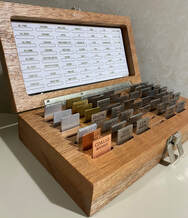
Utilizing quality reference standards is critical to maximizing the performance of many x-ray fluorescence analyzers.  While offered for many applications (RoHS testing, geological interests, petrochemical analysis, etc) a majority of reference standards that the Eastern Applied laboratory develops are for coating thickness measurement applications.

When it comes to purchasing XRF calibration standards for thickness analysis you should know what type of format you are seeking as there are two styles to choose from: plated or foil.  Both formats are commonly used throughout industry and provide reliable results.  When determining the best fit for you consideration must be made to the model of XRF analyzer the standards will be used on, constituents of interest and target thicknesses, whether the calibration curve will be created with or without use of fundamental parameters (FP), and how the standards will be used.

Foil-XRF-Reference-Standard
Foil Standards
: this style is created with the foil of desired material and thickness attached to a stainless steel foil holder.  The foil is then temporarily secured on top of a plastic chip containing the desired base material.  When a range of thicknesses are required, the user will have several foils of difference thicknesses to span the desired range.

Pros of Foil:
-   Versatility: foil standards can be placed over any desired substrate, thereby increasing the range of applications
-   Multi-Layer Flexibility: they are generally stacked on top of one another for a reliable method of multi-layer analysis.  A common question regarding stacking foils is whether or not the air gaps influence results - the answer is no; any air gaps are so small that they are negligible in the thickness reading.
-   Usable Curves: when using stacked foils for multi-layer analysis there are essentially three useful calibration curves, two single layer curves and one multi-layer curve.  By nature, one of the single layers is the first plated layer and can be used to monitor the plating in-process.

Cons to Foil:
-   Fragile: while more versatile, the foils themselves are fragile and must be handled with care to avoid punctures.  Generally speaking, foil standards are not ideal for everyday use or in environments where they might come into contact with a lot of dirt as they cannot be cleaned.

Plated-XRF-Standards
Plated Standards
:  these are created by electroplating the desired material of specific thickness onto a permanent base material.  When a range of standards is required, the user will have standard pieces of several different thicknesses to span the desired calibration range (layers and base material in one piece for each thickness).

Plated Standard Pros:
-   Durability: compared with foil pieces, plated standards tend to be more durable and tolerate heavy handling.  However, they are still prone to damage when the measured surface comes into contact with an object that scratches it.  Even the user touching the surface can cause damage due to the dirt from the environment or oils on a user’s hands.
-   Extended Life: fortunately, if scratches or damages do occur on a plated standard, all is not lost.  In most cases, the standard can be polished with a fine grit polish and remarked to reflect the new, lower, value.

Cons to Plated:
-   No Versatility: with the coating permanently fixed onto a base material, a user will need to have a different plated standard for each thickness and base material combination they require.
-   Potential Variation: it is well documented that certain plated metals such as lead, gold, silver and tin (to name a few) will migrate over time; thus potentially changing the thickness of the reference material.  This change takes a long time but can easily be monitored by having reference standards certified yearly by an accredited laboratory.

These are just a few thoughts to help you begin the discussion with Eastern Applied Research’s standards laboratory when it is time to purchase new reference standards.  Request a phone call or email by a lab technician to discuss further.

Major Damage to Your Xray Fluorescence Analyzer?

An earlier XRF-Blog entry highlighted what users of x-ray fluorescence can do to extend the life of their analyzer. 
This entry focuses on the times that are out of the users control - when major damage occurs to a system.

A few examples of recent major damage issues that we’ve seen…

Hydrochloric Acid Spill - acid was sucked into the XRF analyzers fans, creating corrosion to the internal components and destroying the computer.  Our technical staff was able to clean the system, replacing the corroded boards and components in addition to the computer system (with updated software).

Multiple Units Repaired After Fire Damage - it was like “XRF Backdraft”…smoke, fire and water get on the systems (during the fire and the effort to put it out) and the systems required a thorough cleaning of the ash, completely revamping the interior of the machine and component replacement; but the customers still saved money when compared to investing in multiple new units.

Water Line Over the Analyzer Broke - water everywhere…essentially destroyed the electronics and power supplies.  After an extended dry time then a thorough cleaning and reparing of components/wiring, the analyzer worked well and saved the budget of our customer.

Repaired-XRF-Analyzer

As you can see, in the twenty years that Eastern Applied Research has been providing support of XRF analyzers, our technical staff has seen some very tough spots for our clients and their xray units.  While we can offer the option of new analyzers, not all clients have the budget to consider that - especially after some of the issues that affect much more of a business than just the xray fluorescence unit.

Eastern Applied Research works for the clients and offers all the options possible to solve their problems.  Our in-house staff has worked some ‘miracles’ to limit the out-of-pocket while providing end-users with good working systems.

Hopefully, you don’t run into problems like the above…but, if you do, Eastern Applied will do our best to offer multiple options.  Of course, our technicians can do the minor repairs and adjustments you may require as well so keep us in mind for all questions relating to x-ray fluorescence.  Learn more about our repair and evaluation services or contact us to discuss your interests.